
Boundary problems, or more specifically, boundary-value problems crop up all the time in physics. They involve differential equations which means Calculus which means high school students screaming in sheer terror and weeping like babies as they run out of the building. That aside, these problems crop up in everyday situations such as:
- Electromagnetic field analysis in antenna design, waveguide theory, electric motor modeling and trying to figure out why electricity occasionally flows into the lights in our bonus room ceiling fixture at three AM for no good reason I can think of. Except maybe ghosts.
- Heat conduction analysis: “Honey, why is this window open when we have the AC running?”
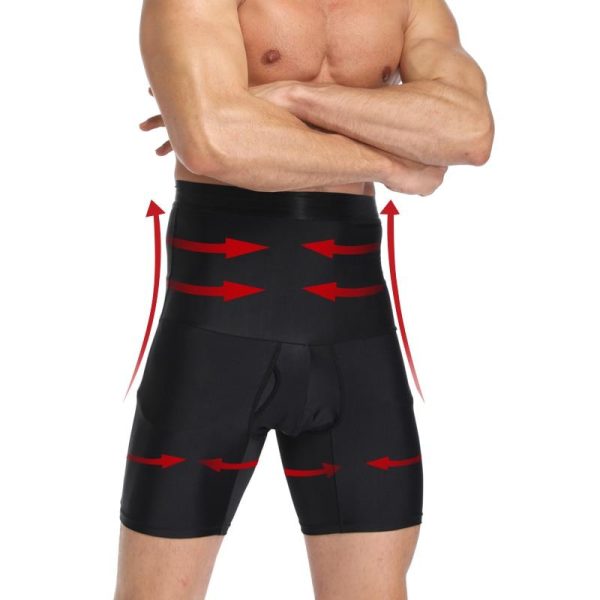
- Structural mechanics, including stress analysis of aircraft components, civil engineering structures and “shapewear”
- Acoustics, in modeling sound propagation in enclosures, underwater environments and in harmonicas played at crazy-high speed such as the one in the riffs found at 2:27 to 2:46 minutes and 3:59 to 4:27 minutes (not to be specific) in the 1994 Blues Traveler song: Run-Around.
- Fluid dynamics, in computing flow around aerodynamic surfaces and into (hopefully) the toilet bowl in the case of explosive diarrhea. I only bring this up because it’s Dave Barry’s fault: (5) Today’s Topic – Dave Barry’s Substack
But enough math. We need to get on with it and talk about other kinds of problems involving boundaries.
Here in the International Squabbling Division of the Lateral Thinking Department, things are getting interesting. As we all know, on August 27, 2026, President Trump signed an executive order changing the name of Lake Ontario to “Lake America” for U.S. federal purposes. I’m not exactly sure what those federal purposes were but one of them was probably to have the last word in the somewhat bitter verbal tariff skirmish between Trump and Ontario Premier Doug Ford.
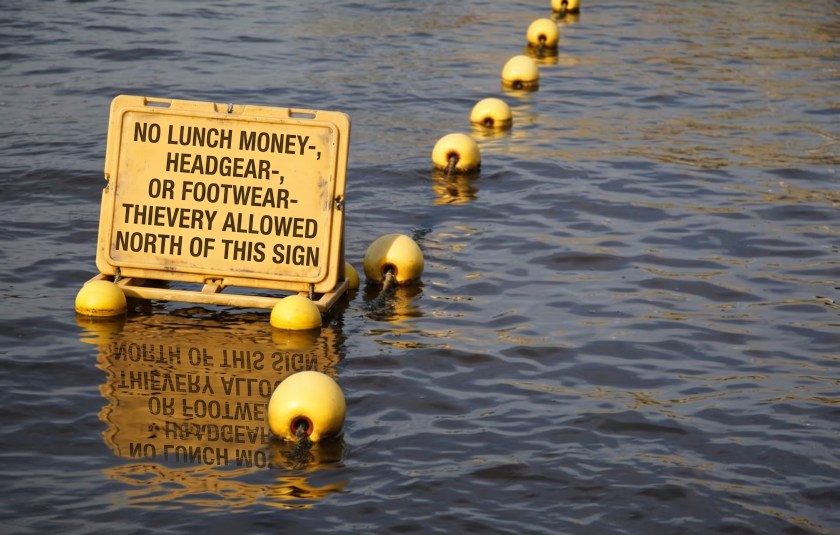
Trump called Ford a loser and said he (Ford) is “… better known as the less charismatic, less intelligent, and overall unimpressive brother of the late, great, Rob Ford.” Ford countered with this somewhat mystifying rejoinder: “President Trump would steal your lunch money on the first day. He’d steal the toque off your head the second day, and the third day, he’d steal your running shoes.”
That reminds me of this saying: “Walk a mile in another man’s shoes. You’ll be a mile away. And you’ll have his shoes: and also, possibly his toque.”
Anyway, clearly, we’re heading into a boundary problem because the Lake Formerly Known Only As Ontario is shared with the province of Ontario and also New York State. That watery boundary is about 165 miles long and is only marked by a couple of buoys and gulls.
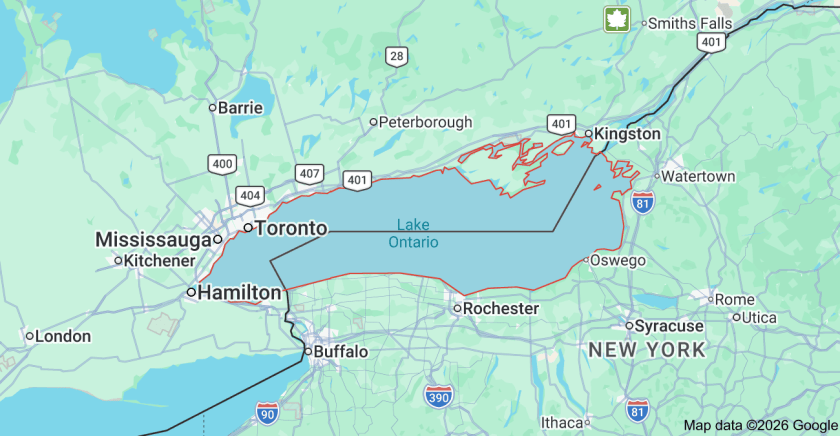
Maybe the U.S. and Canada can work together to string a rope with floats on it across the lake (similar to the lane lines in a swimming pool) provided Trump gives Ford’s toque back first. Ford could erect floating signs like the following along the floating boundary line:
There are more things I need to get off my chest but I feel like they are best dealt with in the time-honored Q and A format, which allows me to bring almost anything into the conversation, including non sequiturs.
Q: Speaking of boundaries, do sharks respect boundaries? Are there sharks in any of the Great Lakes? I heard that there are sharks in Lake Michigan.
A: There are no sharks in Lake Michigan. Or in any of the other Great Lakes including the Lake Formerly Known Only As Ontario.
Q: Prove it.
A: OK: See this: Have there been shark sightings in the Great Lakes? – The Institute for Environmental Research and Education
Q: I hate sharks. I’m still undergoing intensive psychotherapy since I saw the Jaws movie in 1975.
A: Almost everybody was traumatized by Jaws. That doesn’t stop people from shorecasting next to the people who are swimming in the ocean.
Q: What about rivers?
A: What about them?
Q: Do sharks live in any rivers including the St. Lawrence Seaway (which, by the way, is on the Canada-U.S. border)? Please say no.
A: The sharks don’t know how to work the locks in the Seaway. So that’s a No. Nevertheless, several freshwater rivers are known to be inhabited by sharks, particularly the bull shark. Examples include:
- Amazon River: Home to bull sharks that can swim thousands of kilometers inland.
- Mississippi River: At least one bull shark has been captured as far upriver as Alton, Illinois, 2800 kilometers from the Gulf of Mexico. Bull shark: “I thought Mom told me to turn left at the Mississippi River, not right,”
- Ganges River: This river is also known to harbor bull sharks.
- Brisbane River: Australia’s Brisbane River is a well-known habitat for bull sharks. And probably Saltwater Crocodiles which make bull sharks look like tadpoles.
- Lake Nicaragua: see Ganges River
Q: Sigh. I knew it! What’s up with these bull sharks?
A: Bull sharks can tolerate semi-salty (brackish) water at the estuaries where fresh water flows into the oceans. For example, The movie Jaws was based on a bull shark attack in Matawan Creek, New Jersey. And just so you know, bull sharks can exert a bite force of 1300 pounds per square inch.
Q. Stop talking about Jaws and jaws.
A. That wasn’t really a statement or a question. It was basically a command.
Q: Sorry. I recently stumbled across a website entitled 20 Fun Facts about Bull Sharks. How can there be anything fun about man-eating sharks?
A: Good question. There is nothing remotely fun about bull sharks. The person who made that list must be certifiably insane.
Q: One of the 20 “fun” facts is this: “Bull sharks won’t hesitate to throw a surprise party for unsuspecting pets taking a dip. There have been documented cases of these sharks going after dogs and horses.” So my question is: Why aren’t they called Horse Sharks?
A: You’re overthinking the problem.
Q: You mentioned that Bull sharks like estuaries. So. I’m guessing it’s not a great idea to go swimming in the Everglades because they are basically loaded with estuaries which feature Bull sharks. What do you think?
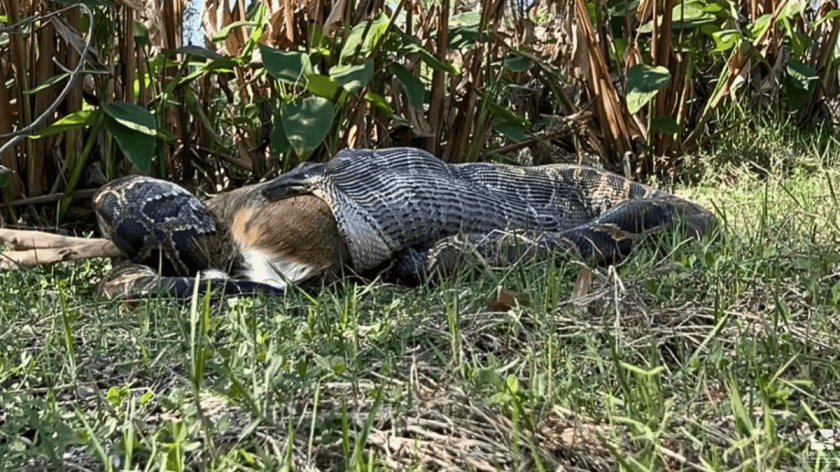
A: I think you too, might be certifiably insane. No one in their right mind would even think of swimming there. And bull sharks are the least of your worries. You need to worry about the several hundred thousand Burmese Pythons now inhabiting the ‘Glades.
Q: Speaking of the Everglades, could Flipper have beaten a Bull shark in a fight?
A: Mano a mano? No. Flipper plus a few of his dolphin buddies? Possibly. A dolphin pod could probably kick that bull shark’s cloaca and drive it away. Never to return.
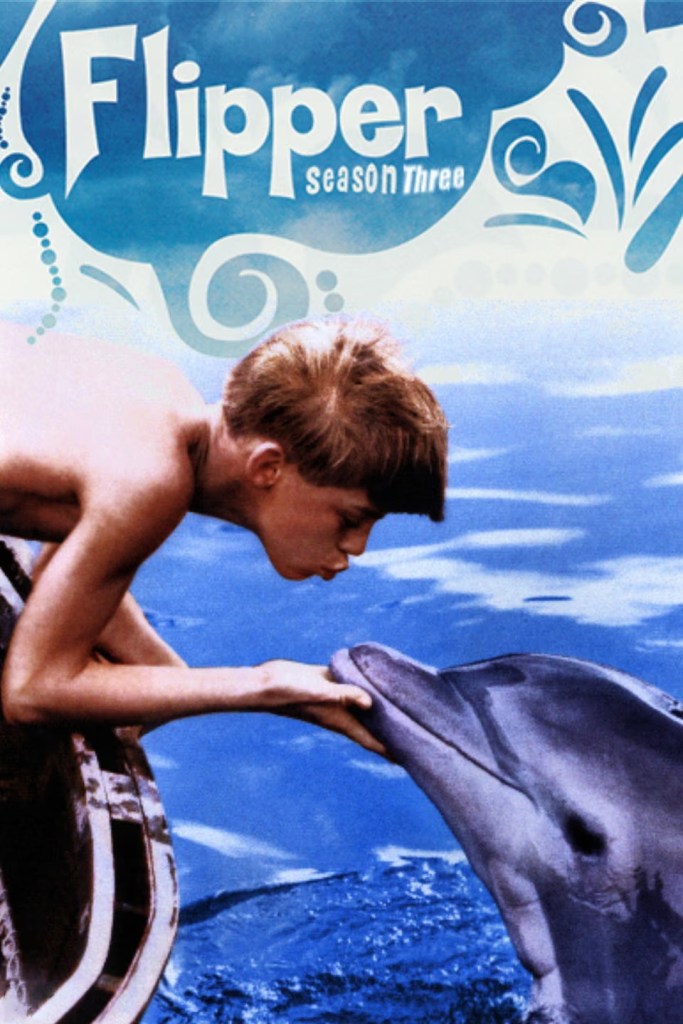
Q: Coud a dolphin kill a python?
A: Probably not.
Q: What about Honey Badgers? Could a Honey Badger kill a python?
A: Yes.
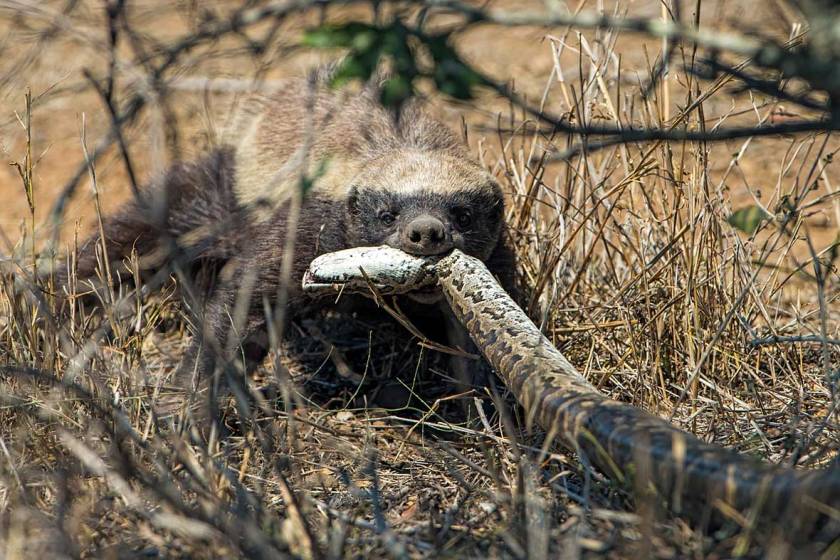
Now go away and stop bothering me. Stay in your lane but just remember: keep an eye on your running shoes, your lunch money and your toque.


You must be logged in to post a comment.