Just so you know, here in the Department of No Longer Babysitting Organic and Inorganic Mass Spectrometers (As Well As Immunoassays), I have more time on my hands to read articles from outfits like Quanta Magazine.
Here is their Mission Statement, in case you were wondering:
“Our reporters focus on developments in mathematics, theoretical physics, theoretical computer science and the basic life sciences. Even the best traditional news organizations often provide fake narratives about applied areas of science such as health, medicine, technology, engineering, your sock drawer and the environment. We strive to complement and augment existing media coverage.
Our work often resembles journalistic alchemy — we mash together the complexities of science with the malleable art of storytelling in an attempt to forge a precious new alloy. It can be a mind-bending enterprise, but we relish the challenge.“
OK, OK. I apologize for this being such a long Mission Statement but also for probably lying about the fake narratives bit. These days you can never know for sure. Remember this: “Only your hairdresser knows for sure“.
But speaking of mind-bending enterprises, consider the following conversation taken from this book:
ATTORNEY: Doctor, before you performed the autopsy, did you check for a pulse?
WITNESS: No.
ATTORNEY: Did you check for blood pressure?
WITNESS: No.
ATTORNEY: Did you check for breathing?
WITNESS: No.
ATTORNEY: So, is it possible that the patient was alive when you began the autopsy?
WITNESS: No.
ATTORNEY: How can you be so sure, Doctor?
WITNESS: Because his brain was sitting on my desk in a jar.
ATTORNEY: But could the patient have still been alive, nevertheless?
WITNESS: Yes, it is possible that he could have been alive and practicing law.
Don’t laugh.
Yet.
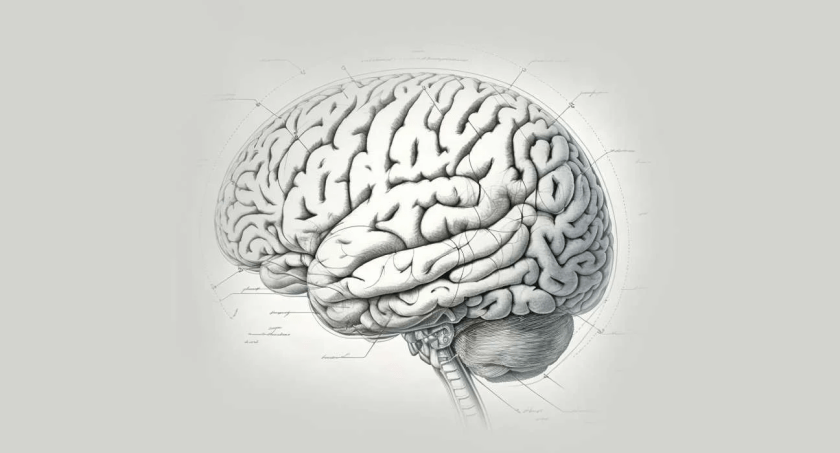
I recently read an article entitled “Can Consciousness Exist Without a Brain?” by Yuhong Dong M.D., Ph.D. which referenced another article by Thomas Verny MD. In that article, Dr. Verny discusses his “embodied mind” hypothesis:
“I started to explore this subject six years ago, when I read an article reprinted from Reuters Science News entitled, “Tiny brain no obstacle…” It seems that in July 2007, a 44-year-old French man went to a hospital complaining of a mild weakness in his left leg. When doctors learned that the man had a spinal shunt removed when he was 14, they performed numerous scans of his head. What they discovered was a huge fluid-filled chamber occupying most of the space in his skull, leaving little more than a thin sheet of actual brain tissue. It was a case of hydrocephalus, literally—water on the brain. Dr. Lionel Feuillet of Hôpital de la Timone in Marseille was quoted as saying, ‘The images were most unusual … the brain was virtually absent.’ The patient was a married father of two children and worked as a civil servant apparently leading a normal life, despite having a cranium filled with spinal fluid and very little brain tissue.”
Now you can laugh.
Here is Official Brain Dogma (OBD for short) straight from the Cleveland Clinic (Mission Statement: “Caring for life, researching for health, and educating those who serve”):
“Collectively, your cerebral cortex is responsible for the higher-level processes of the human brain, including language, memory, reasoning, thought, learning, emotion, intelligence, personality and decision making including deciding not to feed your cat before you go to bed and then regretting that decision when it (the cat) starts scratching on the bedroom closet door at 5 AM because it’s hungry.”
Basically, in his article, Dr. Verny is refuting the Cleveland Clinic OBD and is saying that there’s more to consciousness than a bunch of grey matter. He continues:
“In the animal kingdom, vast ranges in brain size fail to correlate with apparent cognitive power. Crows and ravens, for example, have brains less than 1% the size of a human brain, but still perform feats of cognition comparable to many politicians and also to those people who dream up the stupid trade names for prescription drugs.
Take Ondansetron for example. That sounds like the name of Megatron’s fraternal twin brother. What about Skyrizi? Is that some kind of rice-containing Greek recipe? And what about Zygarde? Whoops! Zygarde is actually a Pokemon. But it could also be the name for prescription deodorant or maybe tick repellant.
Anyway, don’t get me started. Where was I?
Oh yes!
They (the crows and ravens) are also able to put themselves in the position of others, steal hairs from the tails of unsuspecting animals, draft legislation, recognize causalities, and draw conclusions. Pigeons can learn English spelling up to the level of 25-year-old humans educated almost exclusively by TikTok. Behavioral studies have shown that these birds can fashion and use tools including chainsaws, soldering irons and in a pinch: post hole diggers. They can also recognize people on the street and poop on the ones they don’t like—things that even many primates fail to accomplish.“
Note: I have it on the highest authority that chimps and gorillas can fling their kaka at people with deadly accuracy. They just can’t fly.
I skipped the next bit in the article. It was about octopuses and I already wrote about them a long time ago. Never leave your pantry unattended if you own an octopus. It will get into the pantry, find the peanut butter jar, open it and eat every last speck. Just saying.
OK, where was I?
Oh yes!
Undaunted, Dr. Verny forges on to cite research on 600 people with hydrocephalus. (‘Is Your Brain Really Necessary,’ Science 1980 Dec 12;210(4475):1232-4. doi: 10.1126/science.7434023.) Of those 600, the brain fluid took up 95% of the available space in 60 subjects. Of those 60, approximately half had above-average IQs. Many were lawyers or civil servants.

So far, we don’t have a lock on how any of this is even possible but theories abound.
Some people think that when the cortex is missing, neurons from other structures, including but not restricted to the genitals, can be recruited to take over executive functions. That’s the “neuroplasticity” theory.
Then there’s the microtubule theory. Microtubules are tiny tubes present in all cells including neurons. They play essential roles in cell division, movement, and intracellular transport of information. The networks formed by the microtubules are posited to form “quantum devices” that act as a bridge between the quantum world and our consciousness. The networks may act like antennas, capturing and amplifying quantum signals, organizing them, rearranging our sock drawers and somehow generating conscious awareness. Quantum-entangled photons spawned by vibrating lipid molecules may also be involved.
Last but not least: what about the embodied mind hypothesis?
The good doctor, Verny, continues:
“I suggest that people with missing brain tissue who appear to act quite normally perform as well as they do, not because of “neuroplasticity” or “recruitment” of unaffected areas in the brain and possibly the genitals (though no doubt some of that applies) but because the brain never works alone.
Its function is inextricably linked to the body and to the outside world. In the individual who lacks a large part of their cortex, the neurons in the cranial nerves, spinal cord, and other cells in the body (somatic cells, immune cells, etc.) form a network that is constantly communicating with the brain—or what’s left of it—and acts like a backup disk on a computer, containing snippets of memory and functionality that collectively contribute to near normal cognition and behavior.”
Well, there you have it.
Clearly, we’re going to have to rethink (no pun intended) a lot of things such as the “two heads are better than one” aphorism. It seems that sometimes two brain hemispheres are no better than almost no brain hemispheres.
I also think that the Cleveland Clinic needs to amend their Mission Statement to this:
“Caring for life, researching for health, and educating those who serve. Sadly though, we don’t know jack shit about how your brain works.”

 The Department of Lateral Thinking
Hi George,
Your last comment regarding amending the Cleveland Clinic Mission Statement is spot on. I very much enjoyed reading your article. Hopefully before too much longer our BDE technology will add a little to our knowledge of the brain and its function – even though you might be including me in your next article as another example of a person who operates without a brain.
On another subject. We Americans have always been proud of our efforts to support Canada. Now I see that we are doing so once again by being a barrier to Hurricanes.
Best to you,
John
John Osth Chairman & CEO NanoSomiX, Inc. Phone: 949-215-6808 Cell: 949-922-8646 josth@nanosomix.com http://www.nanosomix.com
>
LikeLike