Posted in zany, offbeat, somewhat silly humor

Russian Nanospiral Update: Part II

Before there can be any sober discourse about Russian Nanospirals, I need to get this whole wire transfer business out of my hair. Various questions spring to mind, but chief among them is the following:

Why does it take a bank three or more business days to do what Western Union can do in an hour? Good question!

One explanation is that if a bank can pluck some money out of your account and then somehow delay doing anything with it for a few days, that money is basically in limbo. The bank can lend it to someone else in the interim and make a few bucks on interest.

OK, OK. Call me a cynic.

But this close to Christmas, we shouldn’t be giving in to Cynicism. We should have faith: faith in our fellow humans and faith that large corporations are utilizing technology to enrich the lives of all living creatures including subatomic particles. So what follows is basically a story about faith and hope (and dubious physics).

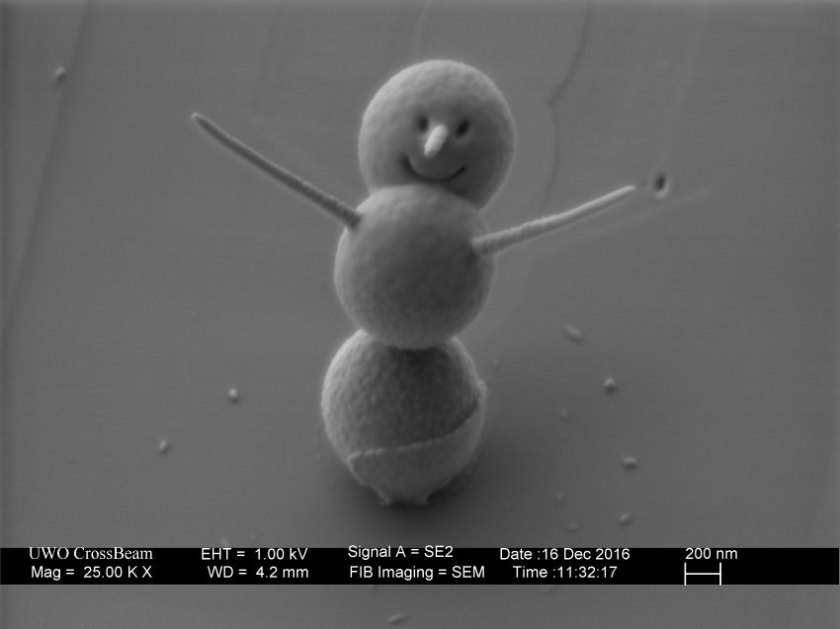
All information these days can be converted into long strings of bits-short for binary digits. These bits can be stored as voltages but also as tiny snowmen made of a special ceramic material first discovered in the Ural Mountains of Russia which is the same place that the Nanospirals were discovered, oddly enough.

And of course, stored bits can be taken OUT of storage and sent someplace else: as trains of electrical pulses through wires or as trains of light pulses through optic fibers.

I think what happens with these banks is that they take your wire transfer information and stash it as trains of electrical pulses in huge magnetic-confinement storage rings.

Now the pulses would just keep whizzing dejectedly around and around the rings in a dark vacuum, day after day, forgotten and hopeless, if it weren’t for the nice bank physicists.
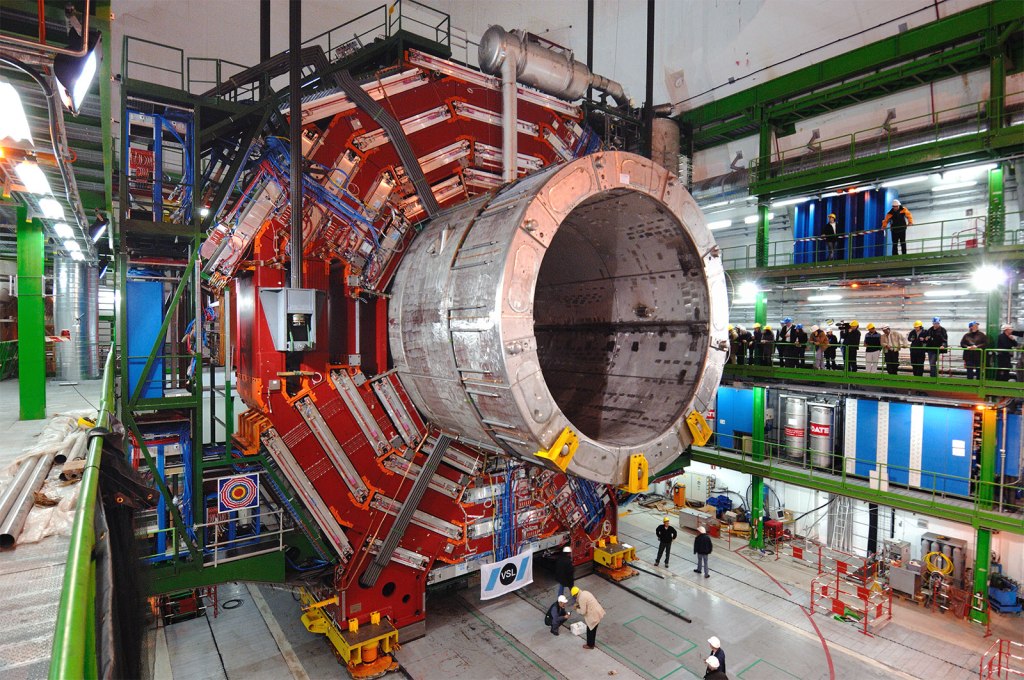
Senior bank physicists busily tending wire-transfer information storage ring

What happens next is almost beyond belief. But hey. ‘Tis the season. Santa Claus is coming to town soon. So get over yourself and believe.

Hand-picked for their lightning-fast reflexes, the bank physicists capture the bits, take them out of the storage loops, talk to them, give them Christmas snacks, read them stories and then shoo the bits gently back into the storage loops. The bits emit tiny contented cooing noises the whole time. It’s awesome.

This scenario unfolds over and over in the next several days and as you can imagine, the bits love the TLC. And the children of the bank physicists love to hear their parents tell them stories about the lonely bits and the tiny cooing sounds. Children love physics! And baby animals!


Unretouched photo of a single bit of information, drooling slightly and eagerly awaiting its next treat
“I would like a gigantic magnetic containment loop and a 500-megawatt generator for Christmas, Santa. And a baby bunny.”

Things get even better, though. When the bank physicists aren’t tending to the money transfer-related bits, they make their way past the storage rings and down through the subterranean levels of the bank, traversing dimly-lit dank corridors roughly hewn out of the living bedrock. Finally they come to the money vaults, where they beaver away tirelessly, washing and blow-drying the ACTUAL BILLS you deposited that morning for safekeeping. (This is called money laundering.) Then the bills are tucked neatly back into cozy heated drawers, where they dream eagerly about the hustle and bustle of the next day’s Christmas shopping.

The bank physicists’ offspring don’t mind hearing about the money-laundering part either, in case you were wondering. And I think The Bank Physicist’s Identical Twin Children would be a great title for a work of Literary Fiction, now that you mention it.

No wonder the banks have to charge all these ridiculous service fees. People simply have NO idea how complicated banking is these days. Especially when Christmas rolls around.

But all good things must eventually come to an end. Sooner or later the bank physicists tire of fiddling around with the money you gave them to give to someone else. They collect the interest, hook the storage rings up to electro-optical converters, tenderly herd the money transfer-related bits out of the storage rings into the convertors whereupon the bits are promptly converted into trains of laser light pulses. The light pulses enter fiber optic cables and 30 milliseconds later they emerge, blinking owlishly, at undisclosed locations 4000 miles away. Probably in Santa Fe, New Mexico. Or maybe Magnitogorsk.

Money should never sit still.

And if you believed ANY of this, you’re ready to hear about Russian Nanospirals. Or maybe The Attack Of The Eyeworms. I haven’t decided yet.

P.S. It just occurred to me that since the bits/electrons are whizzing in a circle, confined by a magnetic field, they are also losing energy by generating synchrotron radiation (see below). This is one of the main reasons why the buying power of your money diminishes over time. Or else it’s those monthly service charges.
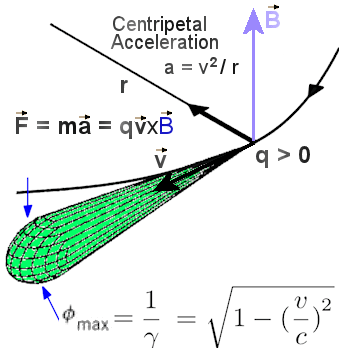
Where does my money go? Besides radiating into space I mean.
Posted in zany, offbeat, somewhat silly humor

Modern Technology

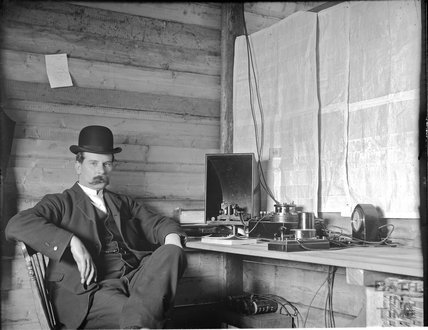
A while ago I needed to send some money to an undisclosed location in California and I decided to do it via a bank draft. Anyone over the age of about 150 or so knows it used to be routine to send money to distant locations by “wiring” it. You just went into a Western Union telegraph office, filled out some paperwork, and somebody else a bunch of miles away had your money within a few minutes. And that’s still true today.

If you use Western Union.

But it’s NOT true if you use a bank draft and the bank you want to send it FROM is also located in the US and you are NOT currently located in the US.

First of all, you have to e-transfer money from your Canadian bank down to your US chequing account. That’s actually pretty straightforward. But then you have to arrange the bank draft to transfer money from the US chequing account to the undisclosed location in California. That’s where the fun begins.

The first thing you have to do is get by the chatbot/mindless sentry you’re connected to when you try to call the US bank where your US chequing account is located. Say it’s RBC located near Atlanta, Georgia, just for the sake of argument.

The chatbot asks you for your 16-digit account number, your shoe size and the name of your first pet. (His name was Harold.) You get through all that and tell the chatbot that you need to set up a bank draft. The chatbot can’t understand what it is you’re trying to do, but before it can explain that you should press “0” or remain on hold for more assistance, you start stabbing the “0” button repeatedly. Somehow you are connected back to the chatbot again. It asks you to enter your 16-digit account number again but now, once bitten and twice shy, you immediately start stabbing “0” repeatedly until you are reconnected to the chatbot yet again.

This cycle repeats itself several times. Forgetting that at some point you were informed that any conversations will be recorded for training purposes (and also to refine the growing psychological profile of you that is being compiled by agents of the Department Of Russian Nanospirals) you finally shout into the phone,

“Jesus, Mary and Joseph! Get a new AI would you?!”

Then you realize you’re actually still talking to a chatbot and you say to yourself:

“You idiot. You’re still talking to a chatbot.”

Finally a nice human being named Sandy answers. At least you’re pretty sure she’s human. She sounds like she’s from New Brunswick. Or maybe PEI. And everyone you know in New Brunswick is human. Ditto PEI. Ergo, Sandy is probably human.

You sheepishly tell her that you just shouted at the chatbot and told it to “Get a new AI would you?!” Sandy giggles and says, “It IS a new AI. But don’t worry. Everybody yells at it.”

You both laugh. (Your laugh is a tad strained.)

You tell Sandy all you want to do is set up a bank draft to send money from your “RBC” US Chequing account to a bank in an undisclosed location in California. Sandy tells you that if you want to send a bank draft, you have to fill out a couple of forms and email them to the “wire desk” so that they can authorize you to transfer money. It’s a one-time formality.

Sandy goes on to explain that after you email your stuff to the “wire desk” you need to wait until the next morning, call the bank again, bypass the chatbot by pressing “0” and ask to be connected to the “wire desk”. Once you reach the “wire desk”, Sandy says they will confirm that they have authorized you to institute wire transfers. Or not.

You ask why you can’t just call the “wire desk” directly from here on in. Nice try but you can’t, she says.

Then you ask how you actually do the bank drafts/wire transfers. Sandy tells you that when you are seized by an urge to send money somewhere you just call up and ask to be connected to the “wire desk”. When you are connected, you just read all the details of the transfer to the person at the “wire desk”: the amount of the transfer, your account number, the routing number, the name and address of the intermediary bank, the account number of the destination bank and so forth. And don’t forget Harold, she says.

When you ask Sandy how long it will take for the money to reach its destination, she says she doesn’t know. Maybe two or three business days.

This is where you officially lose it.

“Wire desk!” you splutter. “That’s where you went 150 years ago when you wanted to wire money from say, St. Louis, Missouri to Santa Fe, New Mexico! I feel like I’ve been in a coma for 150 years and I just woke up!!”

“I know,” she sympathizes.

“And two or three business days??” you splutter. “They might as well outfit a burro with a couple of saddlebags, stuff the cash in the saddlebags, point the burro toward California and slap its rump.”

“I know,” she sympathizes again. “But please stop putting RBC in quotes. You’re not fooling anyone out there. And while you’re at it, stop putting wire desk in quotes too. I get it. You’re emphasizing that the concept of a wire desk is an anachronism. It’s out of place for 2019.”

“Exactly!” you say. “It’s just like those futuristic Russian Nanospirals that were found in that 300,000 year-old rock formation in the Ural Mountains.”

“Where are the Ural Mountains?” Sandy asks.

You sit down and bury your face in your hands in a gesture of disbelief tinged with resignation. Unless you have a treadmill desk. If you have a treadmill desk you pause the treadmill, plant your elbows on the raised platform where your keyboard is, and THEN bury your face in your hands.

Once again, it feels to you like you’ve been in a coma for about 150 years. You just woke up and now you want to wire some money from Atlanta to Magnitogorsk, Russia. Or maybe to Irvine, California. Same difference.

Time to shake it off and start looking for that burro. You can name it Harold if you want to. I won’t mind.

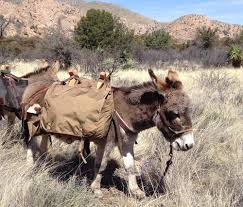
“Harold” the burro”, heading west circa December 2019

Next blog:

Russian Nanospirals: Part II